Queue Management System Guide: Cut Wait Times in 2026
Long lines quietly erode customer trust and staff morale. A modern queue management system turns that chaos into a measured, fair, and data-rich flow that both visitors and managers can see. In 2026, organizations across banking, healthcare, government, and retail treat smart queuing as core telecom and customer-experience infrastructure rather than a nice-to-have add-on.
This guide explains how these platforms work, what to look for before you buy, and how they connect with identity tools and analytics. Whether you run one branch or a national network, the right setup pays back fast in shorter waits and happier customers.
What Is a Queue Management System?
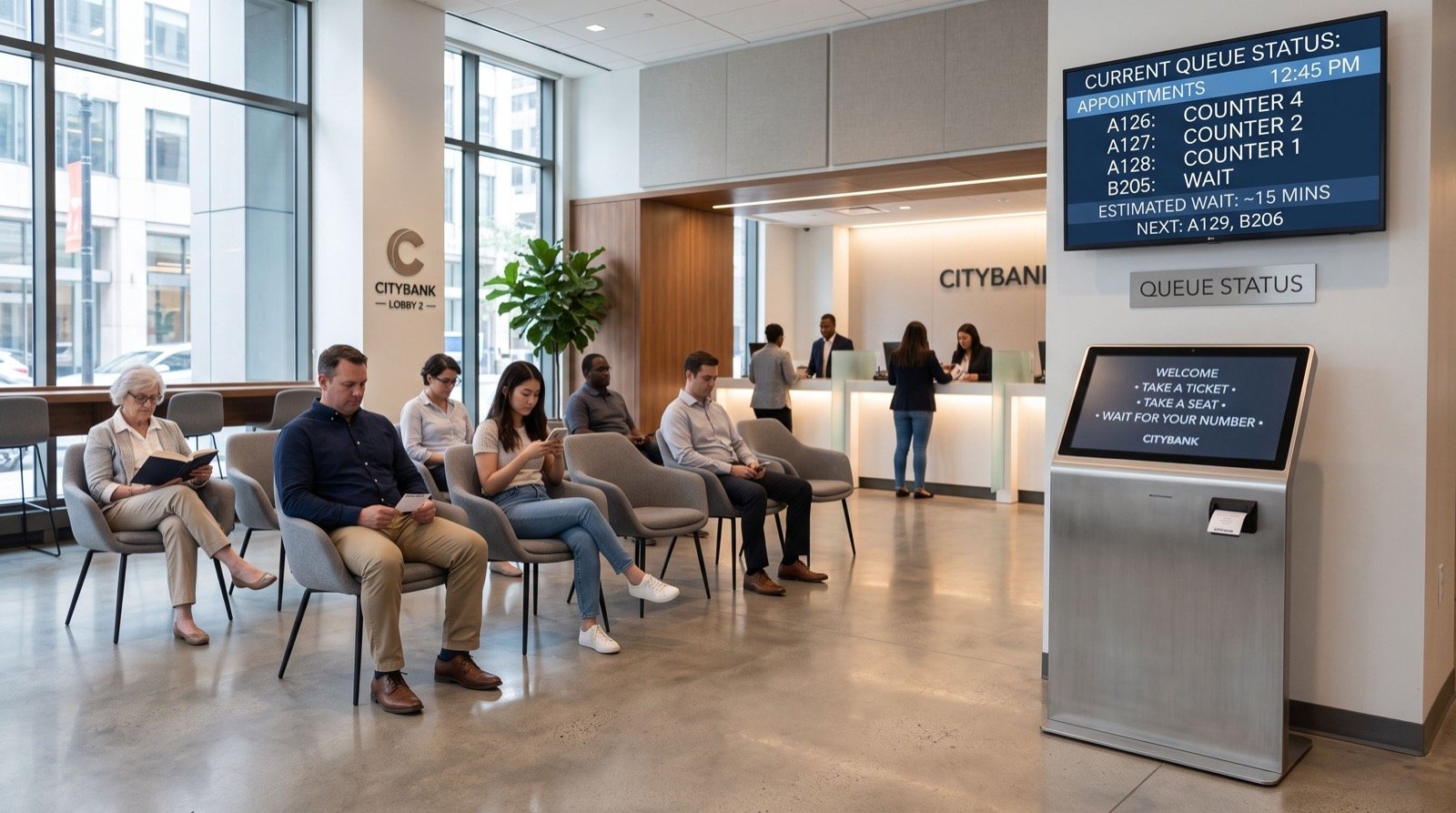
A queue management system is a mix of hardware and software that organizes how people wait for and receive service. Instead of a single physical line, visitors take a digital ticket, join a virtual queue, and get called to the right counter when their turn arrives.
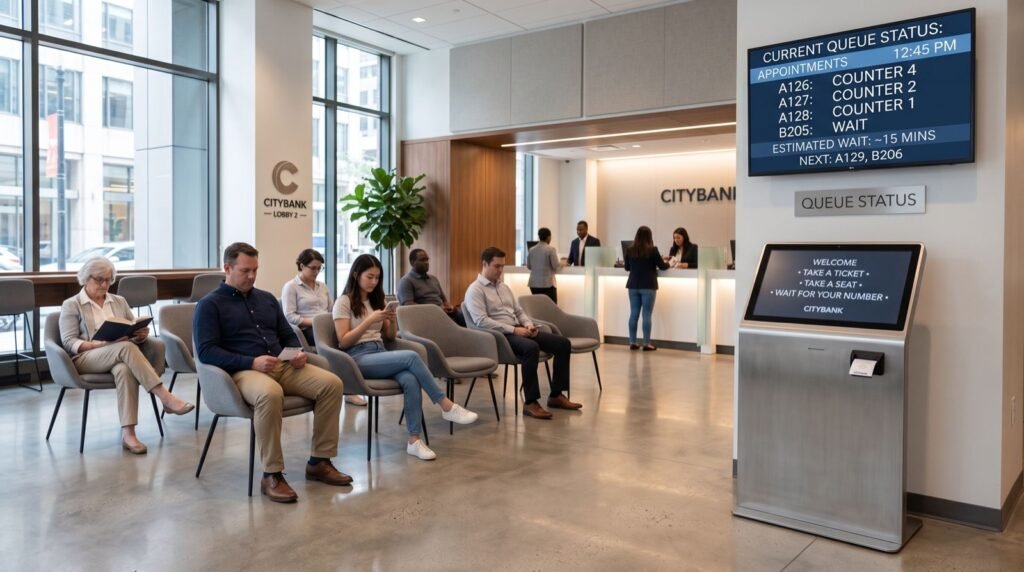
The core pieces usually include a self-service kiosk or mobile check-in, a central queue engine, counter software for staff, and digital signage that displays the called numbers. Businesses that need a robust deployment often start with a dedicated queue management system in saudi arabia built for high-traffic public venues.
Virtual vs Linear Queues
A linear queue is the classic rope line: first come, first served, one path. A virtual queue frees people from standing in place. They can sit, shop, or step outside and return when an SMS or app alert tells them they are next.
Virtual queuing matters most where visits are long or space is tight. Clinics, passport offices, and telecom service centers all benefit from letting customers reclaim their waiting time.
Core Features to Compare Before You Buy
Not every platform fits every lobby. Before signing a contract, score vendors against the capabilities that actually move your wait-time numbers.
- Appointment booking: let customers reserve a slot online and blend them with walk-ins.
- Multi-service routing: send each ticket to the counter with the right skills.
- Real-time dashboards: show live wait times, service times, and counter load.
- SMS and app alerts: keep remote customers informed without a staff phone call.
- Multilingual signage: essential for diverse and tourist-heavy regions.
- Integration APIs: connect with CRM, ERP, and identity systems.
How Identity and Biometrics Strengthen the Queue
Service counters increasingly verify who they are serving before releasing sensitive information. Pairing the queue flow with identity checks removes fraud and speeds up repeat visits. A Biometric Finger Print Scanner can confirm a returning customer in under a second, so staff skip manual lookups entirely.
Biometric accuracy has improved sharply. The U.S. National Institute of Standards and Technology reports that leading fingerprint and face algorithms now perform at very low error rates in controlled tests, which you can review through the NIST biometrics program. That reliability makes biometric check-in practical for everyday counters, not just high-security sites.
A Practical Rollout Tip
Start biometrics as an optional fast lane rather than a mandatory gate. Customers who enroll get instant recognition on return visits, while first-timers still use a ticket. This opt-in approach avoids privacy pushback and builds trust gradually.
Queue Management System Options Compared
The table below contrasts three common deployment styles so you can match a model to your budget and footprint.
| Model | Best For | Typical Setup Time | Relative Cost |
|---|---|---|---|
| Ticket kiosk only | Small branches, single service | 1-2 days | Low |
| Virtual + mobile queue | Clinics, telecom centers | 1-2 weeks | Medium |
| Enterprise multi-site | Banks, government networks | 4-8 weeks | High |
Measuring the Payback
The business case is simple: shorter waits raise satisfaction and let the same staff serve more people. Track three metrics from day one.
- Average wait time: the headline number customers feel most.
- Service time per transaction: reveals training or process gaps.
- Abandonment rate: how many people leave before being served.
Industry analysts at Gartner note that customer-experience leaders increasingly tie such operational data to loyalty outcomes. When you can prove a branch cut average waits by a third, budget approvals for the next site get much easier. For local setup and support, many teams lean on dependable specialists who understand regional service patterns.
Why Does Queue Management Matter in 2026?
Expectations have shifted. Customers who book rides and groceries in seconds now expect the same immediacy at physical counters. A visible, fair queue signals that an organization respects their time, while a disorganized lobby signals the opposite.
There is also a staffing angle. When agents see live load data, managers can shift people to busy counters before a backlog forms. That flexibility reduces overtime and burnout, two pressures that hit service teams hard.
Frequently Asked Questions
How long does it take to install a queue management system?
A single-counter kiosk can go live in a day or two. A multi-site enterprise rollout with integrations and biometrics usually takes four to eight weeks, including staff training and testing.
Can a queue management system work with my existing CRM?
Yes. Most modern platforms expose APIs that push ticket and visit data into CRM, ERP, or booking tools, so you keep one source of truth for each customer.
Do customers need to download an app?
No. Virtual queuing commonly uses SMS links or a browser page via QR code, so visitors can join and track the line without installing anything.
Is biometric check-in safe for customer privacy?
When deployed as an opt-in feature with encrypted templates rather than raw images, biometric check-in meets strong privacy standards and keeps enrollment under the customer’s control.
Implementation Best Practices for 2026
Technology alone does not fix a lobby. The rollouts that succeed pair the platform with clear process and steady change management. Start with a single pilot branch, prove the gains, then scale with the lessons you learned.
Involve frontline staff early. Agents know the real friction points better than any dashboard, and their buy-in decides whether the new workflow sticks. Run a short training session, gather feedback after week one, and adjust the routing rules before the next site goes live.
Plan for peak days, not average ones. A queue platform sized only for typical traffic will buckle during month-end rushes or seasonal spikes. Size kiosks, counters, and signage for your busiest realistic day so the experience holds up when it matters most.
Finally, keep the customer journey visible end to end. Map every step from arrival to departure, then look for the hidden waits between stages. Often the biggest delay is not at the counter but in the handoff between services, and only a full-journey view exposes it.
Conclusion and Next Steps
A well-chosen queue management system is one of the fastest ways to lift satisfaction without hiring more staff. Start by mapping your busiest services, pick the deployment model that fits your footprint, and layer in identity tools only where they add real value.
Ready to shorten your lines in 2026? Audit your current wait times this week, then talk to a specialist about a pilot in your busiest branch. The data you gather will make the full rollout an easy decision.