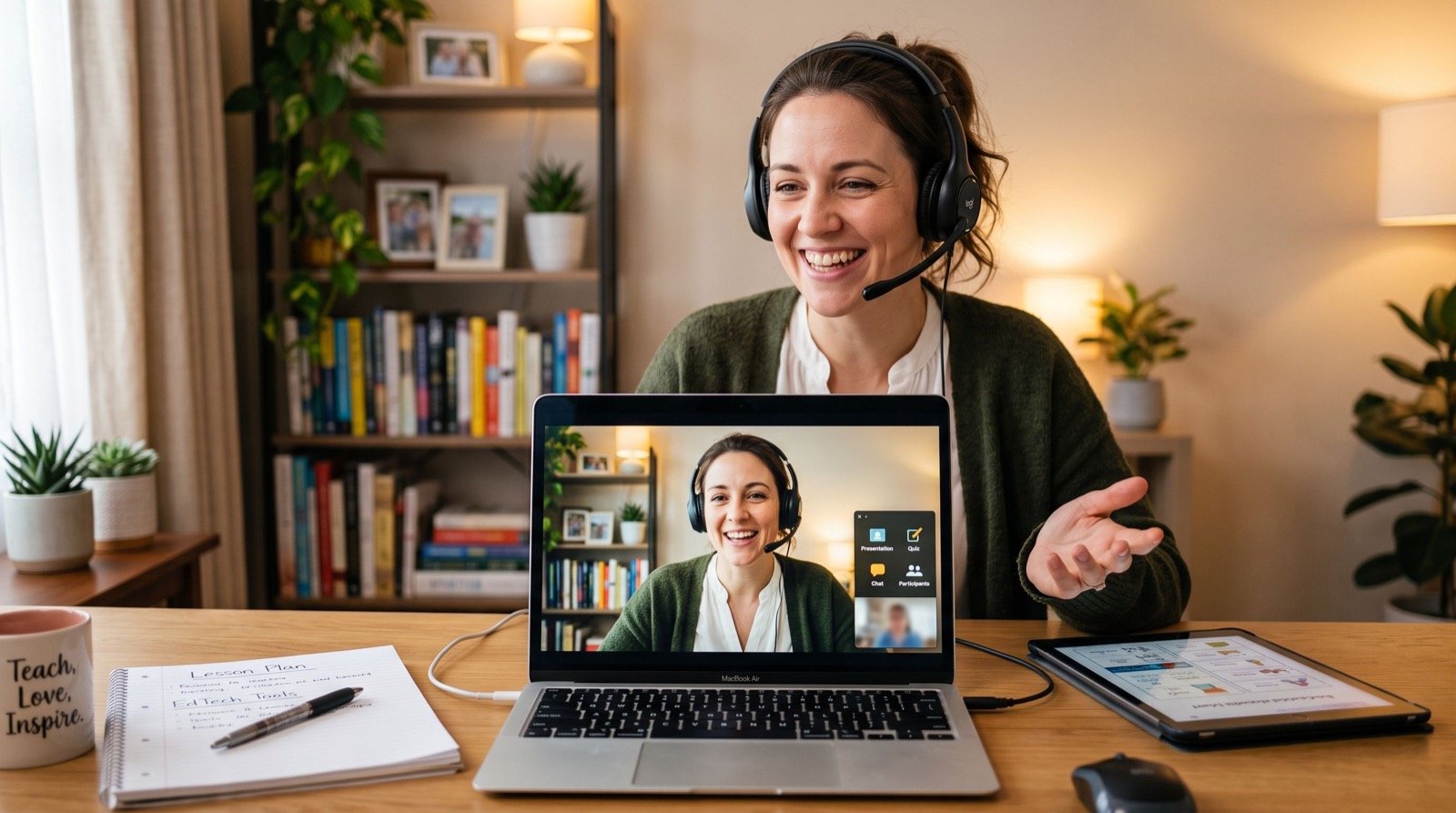
Enrolling in language courses online has become one of the smartest self-improvement moves of 2026, opening doors to careers, travel, and richer communication. Whether you want to master English for university, pick up Arabic for business, or learn French for pleasure, digital language learning now offers flexibility and quality that traditional classes rarely match. This guide explains how online language courses work, which methods deliver fluency fastest, and how to choose a programme that actually gets you speaking.
Learning a language is a marathon, not a sprint, but the right course turns that marathon into a series of achievable, motivating steps. Consistency and structure make all the difference.
Why Choose Language Courses Online in 2026?
Online platforms remove the biggest barriers to language learning: time, location, and cost. You can practise speaking with a tutor from your living room, at a time that suits your schedule.
Technology also accelerates progress. Interactive exercises, instant pronunciation feedback, and spaced-repetition vocabulary tools reinforce learning far faster than a weekly classroom alone.
Research supports immersive, interactive methods. Guidance from the American Council on the Teaching of Foreign Languages stresses that frequent, meaningful communication practice drives real proficiency far more than rote memorisation. Well-structured language courses online build this communication practice into every lesson.
The economic case is compelling in 2026. Bilingual professionals command higher salaries and access opportunities that monolingual peers cannot. In global cities and remote-work markets alike, a second or third language signals adaptability and broadens the roles you can pursue.
Beyond careers, language learning delivers cognitive rewards. Studies repeatedly link bilingualism to sharper memory, better multitasking, and even delayed cognitive decline in later life. Learning a language is, quite literally, exercise for the brain.
What Makes an Online Language Course Effective?
Not every course delivers fluency. The best programmes share a few defining features that separate genuine learning from passive app-swiping.
- Live speaking practice with a real tutor, not just apps
- Structured curriculum aligned to recognised proficiency levels
- Immediate feedback on grammar and pronunciation
- Cultural context that makes language meaningful
- Regular assessment to track measurable progress
Speaking practice is the single most important element. You can read grammar rules forever, but fluency only develops when you use the language in real conversation.
This is where many app-only learners stall. They accumulate impressive vocabulary lists and grammar badges yet freeze when a native speaker addresses them. Language lives in dialogue, in the messy back-and-forth of real exchange, not in isolated flashcards. A tutor recreates that living conversation in every session.
Cultural context deepens the experience further. Understanding idioms, humour, and social norms turns a mechanical translator into a genuine communicator. The best online courses embed culture into lessons, so you learn not just what to say but when and how to say it.
Comparing Language Learning Approaches
Learners today can choose from self-study apps, group classes, or one-to-one tutoring. Each suits a different goal and budget, as the table shows.
| Approach | Speaking Practice | Speed to Fluency | Cost |
|---|---|---|---|
| Self-study apps | Minimal | Slow | Low |
| Group online classes | Moderate | Medium | Medium |
| One-to-one tutoring | High | Fast | Higher |
| Blended (course + tutor) | Very high | Fastest | Medium to high |
The blended model wins for most serious learners. A structured course builds foundations while a tutor sharpens speaking and corrects mistakes in real time.
A Step-by-Step Plan to Learn a Language Online
Fluency follows a clear path when you approach it systematically. Use these steps to build momentum from day one.
- Define your goal: travel, career, exam, or general fluency.
- Choose a course matched to your current level.
- Commit to short daily practice rather than weekly cramming.
- Schedule live conversation sessions at least twice a week.
- Use spaced repetition to lock in new vocabulary.
- Immerse yourself with media, podcasts, and reading.
- Reassess your level every month and adjust your plan.
Daily contact with the language matters more than long, infrequent sessions. Even fifteen focused minutes a day compounds into remarkable progress over months.
Mix your inputs to keep learning fresh. One day, focus on listening to a podcast; the next, practise writing a short journal entry; then hold a live conversation with your tutor. This variety mirrors how you will actually use the language and prevents the monotony that derails so many learners.
Track your progress in a simple log. Note new words learned, conversations held, and topics mastered each week. Seeing tangible evidence of improvement fuels motivation, especially during the slower middle stretch when gains feel invisible day to day.
How Long Does It Take to Become Fluent?
Timelines depend on the language, your effort, and your starting point. A motivated learner practising daily with a tutor can reach conversational ability in a matter of months.
Working with reputable service experts keeps you on track and prevents the plateaus that discourage solo learners. For students who also need academic support, pairing language study with tutors in Islamabad creates a complete learning ecosystem.
Staying Motivated Through the Intermediate Plateau
Most learners breeze through the exciting early stages, then hit a wall. The intermediate plateau is where progress feels slow and motivation dips. Knowing how to push through it separates those who reach fluency from those who quit.
First, redefine success. Early on, every new word feels like a win. Later, gains are subtler, so track different metrics: how long you can hold a conversation, how many episodes of a show you understand, or how comfortable you feel ordering food. These milestones keep motivation alive.
Second, immerse yourself deliberately. Change your phone language, follow creators in your target language, and listen to podcasts during your commute. Constant, low-effort exposure keeps the language present in daily life and steadily builds intuition.
Third, lean on your tutor. A skilled teacher spots exactly why you are stuck, whether it is a grammar gap, a fear of speaking, or simply boredom with your materials. They refresh your plan and reignite your progress before frustration sets in.
Frequently Asked Questions
Which language is easiest to learn online?
It depends on your native tongue and goals. Languages that share vocabulary or script with one you already know are typically faster to pick up.
Are online language courses good for beginners?
Yes. Structured beginner courses build vocabulary and grammar step by step, while live tutors give the speaking practice beginners need to gain confidence.
How much daily practice do I need?
Fifteen to thirty focused minutes daily, plus two live sessions a week, produces steady, lasting progress for most learners.
Can I learn a language purely from apps?
Apps help with vocabulary and grammar but rarely build fluency alone. Real conversation with a tutor is essential for genuine speaking ability.
Conclusion
Language courses online offer the flexibility, feedback, and speaking practice needed to reach fluency faster than ever in 2026. Choose a structured programme, commit to daily practice, and prioritise real conversation with a skilled tutor.
Ready to speak a new language with confidence? Explore expert-led online language courses today and start your journey toward fluency, one conversation at a time.